
A mini excavator warranty claim should not begin with a short message such as “the machine does not work.” A useful request starts with machine identification and evidence. The dealer’s job is not to decide whether the issue is covered — that depends on the supplier’s agreed terms and the specific circumstances. The dealer’s job is to collect enough accurate information for the supplier to evaluate the request properly.
This guide focuses on the documentation and workflow that sits behind a clear after-sales request: how to identify the machine, how to describe a fault precisely, what photos and videos help, how to identify the affected part, and how to keep records that support both the current case and future service. It is written for dealers, distributors and rental operators who need to submit technical, parts or warranty-related requests to a supplier. For general parts identification, refer to the Mini Excavator Spare Parts Guide, and for parts stock planning, refer to the Mini Excavator Spare Parts Inventory Guide.
What Information Should Dealers Prepare for a Mini Excavator Warranty Claim?
Dealers should prepare the machine model, machine identification or serial information if available, engine information where relevant, purchase or order reference, the date the issue was noticed, operating condition, a clear fault description, photos, video, dashboard or indicator information if applicable, the affected component, old-part photo where relevant, part number if available, previous troubleshooting performed safely, and the specific support requested.
Not every request requires every item. The evidence required depends on the type of problem. The purpose is to give the supplier enough information to understand the machine, the fault and the situation.
Start with Exact Machine Identification
Machine identity comes first. Without accurate identification, it can be difficult to confirm the exact configuration, relevant parts or whether the machine matches an earlier shipment. Two machines that look similar should not automatically be assumed to use identical parts.
Useful identification information may include:
- Machine model
- Machine identification or serial number if available
- Engine model
- Engine identification
- Previous order reference
- Customer or dealer internal asset number
- Machine photos
- Nameplate photo
The exact identification format varies by supplier and by machine. Dealers should confirm with the supplier which machine information is required for a service or parts request. The Mini Excavator Spare Parts Inventory Guide explains how installed-machine records support accurate parts identification.
Describe the Fault Precisely
A vague description can slow down the evaluation. A precise description helps technical staff understand what is happening even before they see the machine.
Weak descriptions:
- “Hydraulics are weak.”
- “Machine makes noise.”
- “Engine does not work.”
- “Track has a problem.”
A more useful fault description covers:
- Which function is affected
- When the problem occurs
- Whether it happens continuously or intermittently
- Whether it began suddenly or gradually
- What the machine was doing when the issue appeared
- Whether the machine is still operable
- Whether there are visible leaks, damage, abnormal sound or warning indicators
The purpose is to report symptoms accurately, not to diagnose the cause. A dealer does not need to identify the root cause to submit a clear request. The Mini Excavator Hydraulic System Guide explains hydraulic configuration details that may be relevant when describing hydraulic symptoms.
Use Photos That Show Context and Detail
Photos should show both the context of the machine and the detail of the affected area. A single extreme close-up is often not enough because it does not show where the component sits on the machine or how it connects to surrounding parts.
A useful photo sequence:
- Whole machine
- Machine identification plate or label
- Affected area in context
- Close-up of the component
- Connection points or fittings
- Visible damage or leakage
- Old part if it has been removed safely
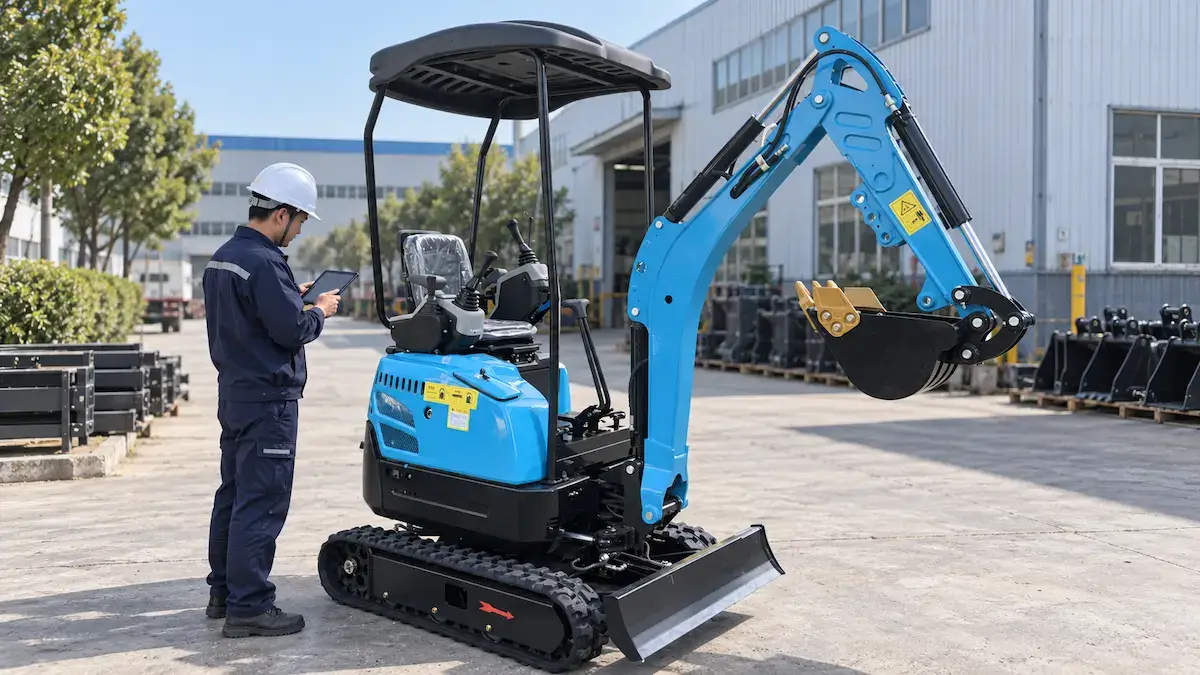
Dealers should not recommend unsafe operation or disassembly to obtain photos. Components under pressure, hot surfaces or electrical systems should only be handled by qualified service personnel.
Record a Useful Troubleshooting Video
A short video often shows more than a photo, because the symptom may only appear during movement or under a specific operating condition.
Useful video content may include:
- Machine start-up
- Control movement
- Boom, arm or bucket response
- Travel behavior
- Abnormal sound
- Visible leakage
- Warning indication
- Component movement
Video should only be recorded when it is safe to do so. If the machine may be unsafe to operate, stop operation and follow qualified service guidance. Do not ask an operator to recreate a dangerous failure or to bypass safety systems to produce a video.
Record Operating Conditions
Operating context helps technical staff understand when the symptom appears. Useful context may include:
- Machine application
- Surface or terrain
- Attachment being used
- Ambient conditions where relevant
- Whether the issue appeared under load or without load
- Whether the issue occurs after start-up or during operation
The purpose is to describe what was happening, not to claim the cause. Operating context is a factual record that helps the supplier understand the situation.
Identify the Affected Part Carefully
Visual similarity is not enough to confirm the correct part. Dealers should identify the affected component using clear information.
Useful identification information:
- Machine model
- Part location on the machine
- Old-part photo
- Part number if available
- Dimensions where specifically requested
- Connector or fitting details where relevant
- Parts diagram reference where available
Dealers should not assume compatibility between similar models. The Mini Excavator Spare Parts Guide explains parts identification and the information required for accurate parts requests.
Record What Has Already Been Checked
If safe checks have already been performed, they should be documented. This helps the supplier understand what has already been checked and what information is still available for further evaluation.
Examples of safe checks that may have been performed:
- Visual inspection
- Fluid level check where applicable
- External hose inspection
- Electrical connection inspection
- Visible damage check
- Basic function observation
Dealers should record checks that were already performed safely or by qualified service personnel. The request should not instruct users to open pressurized hydraulic systems, bypass safety devices, disable interlocks, perform dangerous electrical work, operate unstable machinery or remove major components without qualified service support.
Separate Technical Support from Warranty Eligibility
A machine problem and a warranty claim are related but not identical.
Technical support asks: what is wrong?
Warranty evaluation asks: does the issue fall within the agreed warranty terms?
Warranty eligibility depends on the supplier’s agreed terms and the specific circumstances of the issue. A dealer should not promise coverage before the supplier has reviewed the machine identity, issue description, evidence, service history where relevant, and the applicable warranty terms.
The purpose of the documentation process is to provide enough information for the supplier to evaluate the request. The dealer should review the applicable warranty terms before making any commitment to the customer.
Build a Standard Dealer Claim Form
A standard internal form makes it easier to collect consistent information for every case. The form does not need to be complex — it needs to be complete.
| Field | Information to Record | Why It Matters |
|---|---|---|
| Dealer / customer reference | Internal reference number | Enables case tracking |
| Machine model | Model name and configuration | Identifies the machine family |
| Machine identification | Serial or ID number | Identifies the specific machine |
| Engine information | Engine model and identification | Relevant for engine-related issues |
| Original order reference | Order or batch reference | Links to the machine’s delivery record |
| Date issue reported | Date the problem was noticed | Supports timeline of the issue |
| Operating condition | Application, terrain, attachment | Provides context for the symptom |
| Fault description | Precise symptom description | Helps technical evaluation |
| Affected function | Which machine function is affected | Narrows the possible system |
| Photos provided | Whole machine, affected area, close-up | Visual evidence of the issue |
| Video provided | Short video showing the symptom | Shows behavior that photos cannot |
| Affected part | Component name and location | Supports parts identification |
| Part number if available | Old part number where readable | Confirms correct part |
| Previous checks | Safe checks already performed | Shows what has already been reviewed |
| Machine operating status | Operable, limited or stopped | Indicates urgency |
| Requested support | Technical advice, parts or both | Clarifies the request type |
| Supplier response | Recorded after supplier review | Keeps a documented trail |
| Resolution | What was actually done | Supports future service work |
| Closure date | Date the case was closed | Enables case review |
How to Submit a Clear Parts Request
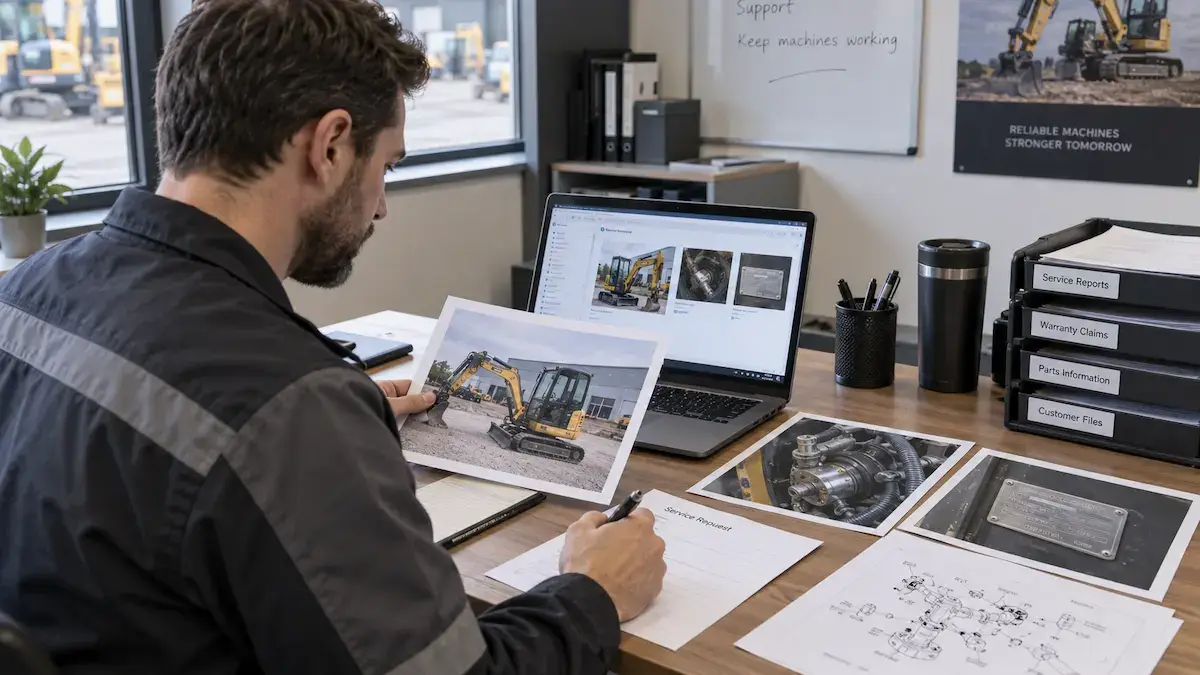
A parts request should include enough information for the supplier to confirm the correct part, even when the case is not warranty-related.
Useful structure for a parts request:
- Machine identification
- Affected component
- Photo of the old part and its location
- Part number if available
- Quantity required
- Reason for the request
- Shipping destination if needed
Dealers should not assume that parts are free, that shipping is free, or that the request is warranty-covered. If the request may be related to warranty, the dealer should identify that separately and allow the supplier to review eligibility based on the agreed terms.
Keep Customer Communication Separate from Supplier Evaluation
The dealer sits between the customer and the supplier. Clear separation between the two conversations helps avoid misunderstandings.
The dealer can tell the customer that:
- The issue has been recorded
- Evidence has been collected
- Technical information has been submitted
- Supplier review is pending
The dealer should avoid promising:
- Free repair
- Free parts
- Claim approval
- Specific completion date
This is a communication discipline, not a warranty policy. It protects the dealer’s relationship with the customer while the request is under review.
Record the Resolution
Once the issue has been resolved, the dealer should record the outcome. The record is useful for the current case and for future service work.
Items to record:
- Final diagnosis
- Confirmed part
- Repair performed
- Replacement part reference
- Technician notes
- Photos after repair where useful
- Date completed
- Customer confirmation where applicable
The Mini Excavator Spare Parts Inventory Guide explains how service records support parts inventory planning and future parts identification.
Use Claim Records to Improve Dealer Operations
Accumulated service and claim records may reveal operational patterns if those patterns exist. The dealer should not assume that patterns exist before reviewing the data.
Possible areas that records may inform:
- Frequently requested parts
- Recurring customer questions
- Documentation gaps
- Training needs
- Parts inventory needs
- Configuration differences between batches
- Service workflow bottlenecks
Repeated records may reveal patterns if they exist. They should not be used to make claims about failure rates, component lifespan or service intervals unless the specific data supports those claims.
Common Warranty Claim Documentation Mistakes
- Reporting only the model name
- No machine identification
- Vague fault description
- Only one close-up photo
- No operating-context information
- Video does not show the symptom
- Assuming part compatibility between similar machines
- Removing parts before documenting them
- Promising warranty approval to the customer
- Failing to record the final resolution
These mistakes are usually avoidable with a standard claim form and consistent recordkeeping.
Mini Excavator Warranty Claim Checklist for Dealers
Every status starts at “To Confirm” — the purpose is to make sure important items are collected before the request is submitted.
| Check | What to Prepare | Status |
|---|---|---|
| Machine model | Model name and configuration | To Confirm |
| Machine identification | Serial or ID number, nameplate photo | To Confirm |
| Order reference | Previous order or batch reference | To Confirm |
| Fault description | Precise symptom description | To Confirm |
| Operating condition | Application, terrain, attachment | To Confirm |
| Whole-machine photo | Photo showing the machine in context | To Confirm |
| Affected-area photo | Photo showing the affected area | To Confirm |
| Close-up photo | Detail photo of the component | To Confirm |
| Video | Short video showing the symptom safely | To Confirm |
| Part identification | Old-part photo, part number if available | To Confirm |
| Previous safe checks | Checks already performed safely | To Confirm |
| Service history where relevant | Prior service or parts records | To Confirm |
| Requested support | Technical advice, parts or both | To Confirm |
| Warranty terms reviewed | Applicable terms reviewed by the dealer | To Confirm |
| Supplier response recorded | Recorded after supplier review | To Confirm |
| Resolution recorded | Final outcome documented | To Confirm |
Questions Dealers Should Ask the Supplier
- What machine identification do you require?
- What photos should be provided?
- Is video required for this type of issue?
- What part information should be included?
- Do you need the original order reference?
- Should the affected part be removed before review?
- What safe checks should be completed first?
- Does the supplier require a specific claim form?
- What additional evidence may be required?
- How should replacement-part requests be identified?
- Should old parts be retained?
- How should repair results be documented?
- How should future service requests reference this case?
- Who should the dealer contact for technical support?
How ZHAOLU Fits into Dealer After-Sales Support
ZHAOLU currently lists mini excavators approximately from 0.5 ton to 2.5 ton. For a service or warranty-related request, dealers should provide enough machine and issue information for the request to be reviewed accurately.
Useful starting points:
- Review the available models on the Mini Excavator Product Category page.
- Review commercial supplier information on the Mini Excavator Supplier page.
- Reference the machine’s original order details when submitting a service request.
Dealers should apply the same documentation principles described in this article to any supplier, including providing clear machine identification, an accurate fault description and supporting evidence.
Need Help with a Mini Excavator Service or Parts Request?
If you need technical, parts or warranty-related support for a ZHAOLU mini excavator, provide the machine model, identification information, issue description, photos or video, affected component and your contact details. The information can then be reviewed based on the specific machine and request.
Frequently Asked Questions About Mini Excavator Warranty Claims
What information is needed for a mini excavator warranty claim?
A useful request includes the machine model, machine identification or serial information, engine information where relevant, order reference, fault description, operating condition, photos, video if possible, affected component and any safe checks already performed. Not every case requires every item — the required evidence depends on the type of problem.
Do I need the machine serial number for a service request?
Machine identification helps the supplier confirm which configuration is involved and which parts may be relevant. The exact identification required varies by supplier and machine. Dealers should confirm with the supplier what information is needed.
What photos should I provide for a mini excavator fault?
Useful photos include a whole-machine view, machine identification plate, the affected area in context, a close-up of the component, connection points and any visible damage or leakage. A single close-up may not be enough.
Should I send a video of the problem?
A short video can show symptoms that photos cannot, such as intermittent behavior, unusual sound or control response. Video should only be recorded when it is safe to do so. If the machine may be unsafe to operate, stop operation and follow qualified service guidance.
Can a dealer promise warranty coverage before supplier review?
No. Warranty eligibility depends on the supplier’s agreed terms and the specific circumstances of the issue. A dealer should not promise coverage before the supplier has reviewed the machine identity, issue description, evidence and applicable terms.
How should a dealer identify a replacement part?
Dealers should identify the machine model, part location, old-part photo and part number where available. Visual similarity alone is not enough, and similar machines should not be assumed to use identical parts.
Should old parts be kept after replacement?
Whether old parts should be retained depends on the supplier’s requirements and the nature of the case. Dealers should confirm with the supplier before discarding replaced components that may be part of an ongoing review.
Why should dealers keep service and claim records?
Records support accurate parts identification, future service work, configuration comparison between batches and internal review of service workflow. They also help the dealer respond more consistently when similar issues appear in the future.