
“`html
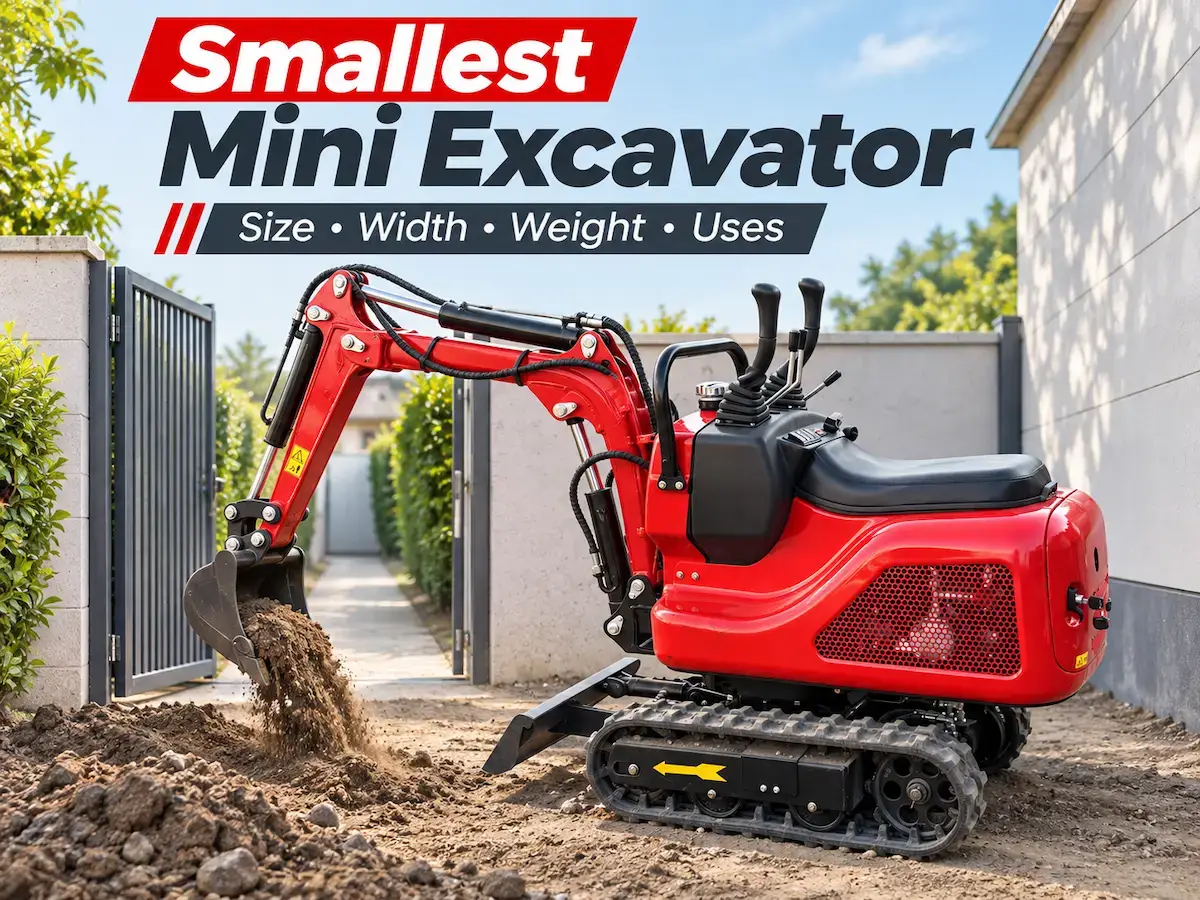
The smallest mini excavators sit at the micro end of the compact excavator market. There is no single universal weight or width that defines the category, so buyers should compare actual operating weight, width, transport height and digging capability rather than relying only on terms such as “micro” or “0.5 ton.”
This guide explains how small these machines can practically be, what they can actually do, and when choosing the smallest machine makes sense versus when a larger class is the better decision. The ZL-05 0.5 Ton Micro Excavator is used as one real sub-tonne reference throughout.
Quick Answer: How Small Can a Mini Excavator Be?
The smallest compact excavators are commonly described as micro excavators or micro diggers. Actual dimensions vary by model, so buyers should compare the key figures directly rather than relying on the category name.
As one real ZL-05 reference, the current specification lists 420 ± 20 kg operating weight, 640 mm transport width, 1101 mm transport height with handles removed, 912 mm maximum digging depth and 1962 mm maximum digging radius. These are ZL-05 model-specific figures and should not be generalised to every micro excavator.
| Key Figure | ZL-05 Reference | What Buyers Use It For |
|---|---|---|
| Operating Weight | 420 ± 20 kg | Transport planning and machine-class comparison |
| Transport Width | 640 mm | Narrow gate, alley and side-access planning |
| Transport Height | 1101 mm with handles removed | Overhead clearance and storage planning |
| Maximum Digging Depth | 912 mm | Shallow trenching, planting and maintenance work |
| Maximum Digging Radius | 1962 mm | Working reach from the machine position |
What Is a Micro Excavator?
Terms such as micro excavator, micro digger, small mini excavator and sub-tonne excavator are commonly used for the smallest compact excavators. There is no single universal marketing boundary that separates “micro” from “mini” across all manufacturers and markets.
The practical buying question is not which label a machine carries. It is: how small does the machine need to be to reach the work area, and how much digging capability is still required once it gets there?
Two machines that both carry a “micro” label may still differ in operating weight, width, digging depth and working radius. Buyers should compare the actual specifications of the specific model being considered.
Why Buyers Look for the Smallest Mini Excavator
Buyers search for the smallest machine for practical access reasons. Typical situations include narrow garden gates, residential side passages, orchard rows, greenhouses, small farms, landscaping work, irrigation maintenance, property maintenance, restricted storage and small trailers.
In these situations, a larger machine may not be able to reach the work area at all. The value of the smallest class is not raw digging power. It is the ability to get the machine to the work and reduce the amount of manual digging required for small-scale tasks.
Suitability still depends on comparing the machine’s confirmed capability against the actual job. A machine that reaches the site is only useful if it can also complete the work once it is there.
How Narrow Can a Small Mini Excavator Be?
Actual width matters more than the machine-class name. A buyer with a narrow entrance should measure the narrowest physical access point rather than searching only for “0.5 ton excavator.”
As one real reference, the ZL-05 lists a transport width of 640 mm. That figure applies to the ZL-05 and should not be generalised to every micro excavator. Buyers should also allow practical clearance for alignment, surface irregularities, operator control and machine movement.
Machine width alone does not prove that the complete work area is suitable. The access route, turning space and available working area should also be checked. The Mini Excavator Width Guide explains what dimensions to confirm before selecting a machine for a restricted site.
Can a Micro Excavator Fit Through a Garden Gate?
It depends on the actual gate opening, the machine transport width, any height restriction, the turning space, the ground conditions and the working space available after entry.
There is no standard garden gate width that applies to every property. A machine with a 640 mm transport width, such as the ZL-05, may be worth evaluating for narrow-access work, but that does not guarantee it will fit every gate. Buyers should measure the tightest point on the full route and confirm the machine’s exact transport width from the supplier.
How Much Does a Very Small Mini Excavator Weigh?
Micro excavators are generally easier to plan for transport than larger machines, but the exact figure still depends on the model and configuration. As one real reference, the ZL-05 lists an operating weight of 420 ± 20 kg.
That figure applies to the ZL-05 and should not be treated as a standard weight for all micro excavators. Transport planning should use the final quoted configuration, including any attachments or optional equipment. The Mini Excavator Weight Guide explains the difference between operating weight, transport weight and shipping weight.
What Can a 0.5 Ton Micro Excavator Actually Do?
The current ZL-05 product page lists applications including farms, orchards, landscaping, light trenching, irrigation maintenance, tree planting pits, small utility trenches, garden soil removal, ditch maintenance and property maintenance.
In practical terms, a micro excavator in this class can reduce manual digging for these types of small-scale tasks. It is not designed for heavy earthmoving, large foundation excavation, deep utility trenching or large-scale demolition work.
Buyers should match the machine to the job rather than expecting the smallest class to replace a larger excavator. The 0.5 Ton Mini Excavator Buying Guide covers the broader class decision in more detail.
How Deep Can a Small Micro Excavator Dig?
As one real reference, the ZL-05 lists a maximum digging depth of 912 mm and a maximum digging radius of 1962 mm.
That capability is suitable for some shallow digging, planting, irrigation maintenance and small utility work. It may be insufficient where deeper excavation is regularly required. Buyers should compare the required trench or excavation depth against the machine’s confirmed capability rather than assuming a micro excavator will handle every job.
The Mini Excavator Digging Depth Guide explains how to match required excavation depth to machine capability.
Why the Smallest Excavator Is Not Always the Best Excavator
Going extremely small involves trade-offs. A smaller machine generally offers less digging depth, less reach, lower machine mass, a smaller working envelope and more limited capability with demanding attachments or heavier excavation.
The smallest machine is the right choice when restricted access genuinely matters and the required work remains within the machine’s confirmed capability. If the site can accept a larger machine and the work consistently requires more depth or working capability, moving up in machine class may be the better decision.
The Mini Excavator Size Guide explains the wider class comparison, and the 0.5 Ton vs 1.2 Ton Mini Excavator comparison covers the next step up in more detail.
Narrow Access vs Digging Capability: What Should You Prioritize?
The right priority depends on the site and the work. The table below summarises common situations as decision directions, not absolute recommendations.
| Buyer Situation | What Matters Most | Smaller Micro Excavator? | Consider Larger Machine? |
|---|---|---|---|
| Very narrow residential gate | Transport width and height | Worth evaluating | May not fit |
| Orchard rows | Narrow footprint and maneuverability | Worth evaluating | Check row width first |
| Light irrigation maintenance | Shallow digging and access | May be suitable | Often not the first choice |
| Small planting work | Compact size and shallow digging | May be suitable | Often not the first choice |
| Regular deep trenching | Digging depth and reach | May be insufficient | Consider moving up in size |
| Heavy excavation | Digging capability and stability | Typically not suitable | Consider moving up in size |
| Demanding hydraulic attachments | Hydraulic flow and machine capability | Confirm compatibility first | May be required |
| Open construction site | Working capability and job requirements | May be limited | Consider moving up in size |
These are general decision directions. Each project should be compared against the confirmed specifications of the machine being considered.
ZL-05 as a Real Sub-Tonne Micro Excavator Reference
The ZL-05 is ZHAOLU’s current 0.5 ton micro excavator and provides a real sub-tonne reference for buyers comparing the smallest compact excavator classes. It should be evaluated where minimum access width, light transport and routine small-scale digging matter more than maximum digging capability.
| Specification | ZL-05 Reference | Why It Matters |
|---|---|---|
| Product Class | 0.5 Ton Micro Excavator | Defines the marketing class of the machine |
| Operating Weight | 420 ± 20 kg | Supports transport and trailer planning |
| Transport Width | 640 mm | Relevant for narrow gates, alleys and side access |
| Transport Height | 1101 mm with handles removed | Relevant for overhead clearance and storage |
| Maximum Digging Depth | 912 mm | Supports shallow trenching, planting and maintenance |
| Maximum Digging Radius | 1962 mm | Defines the working reach from the machine position |
| Boom Swing | 50° Left / 50° Right | Supports offset positioning along walls and fences |
| Maximum System Flow | 12 L/min | One input when confirming attachment compatibility |
| Engine Power | 6.5 HP | Helps buyers understand the engine class used in this compact machine |
The current ZL-05 configuration uses a single-cylinder gasoline engine. For the current engine specification, refer to the product page. The full current configuration is listed on the ZL-05 0.5 Ton Micro Excavator product page.
When Should You Choose a Larger Mini Excavator Instead?
The ZL-05 is not the correct recommendation for every project. A larger mini excavator may be the better choice when:
- The required digging depth exceeds the ZL-05’s confirmed capability
- The required working radius is insufficient
- The job intensity is consistently higher
- The required attachments exceed the confirmed hydraulic capability of the machine
- The access conditions allow a larger machine, and the additional capability is genuinely useful
Forcing every buyer toward the smallest machine would not serve the project. The right choice depends on the confirmed access and work requirements.
What Should You Measure Before Requesting a Quote?
To receive a useful recommendation, buyers should provide the narrowest access width, any height restriction, the working space available after entry, the required digging depth, the application, the attachments required, the quantity and the destination country or port.
These details allow the supplier to confirm whether a micro excavator class is suitable and whether a specific model such as the ZL-05 matches the requirement. The Mini Excavator Order Checklist explains how to confirm the final configuration before paying a deposit.
Need a Micro Excavator for Narrow Access?
If access width is the main constraint, send ZHAOLU the narrowest access width, application, required digging depth, attachments, quantity and destination country. ZHAOLU can review the requirements against the current micro excavator configuration and confirm whether the ZL-05 or a larger class is more suitable.
Review the current ZL-05 0.5 Ton Micro Excavator or browse the Mini Excavators for Sale page.
Frequently Asked Questions About the Smallest Mini Excavator
What is the smallest mini excavator?
There is no single universal definition. The smallest compact excavators are commonly called micro excavators or micro diggers, and their actual dimensions and weight vary by model. Buyers should compare operating weight, transport width, transport height and digging capability rather than relying on the category name alone.
What is a micro excavator?
Micro excavator, micro digger and sub-tonne excavator are common terms for the smallest compact excavators. There is no single universal marketing boundary between micro and mini classes across all manufacturers and markets.
How wide is a micro excavator?
Width varies by model. As one real reference, the ZL-05 lists a transport width of 640 mm. That figure applies to the ZL-05 and should not be generalised to every micro excavator. Buyers should confirm the exact transport width of the specific model being considered.
What gate width do I need for a mini excavator?
The gate opening should exceed the machine’s transport width and allow practical clearance for alignment, surface irregularities and operator control. As one real reference, the ZL-05 lists a 640 mm transport width, but buyers should still measure the tightest point on the full access route and confirm the exact machine width from the supplier.
Can a mini excavator fit through a garden gate?
It depends on the actual gate opening, the machine transport width, height restrictions, turning space, ground conditions and the working space available after entry. There is no standard garden gate width that applies to every property.
How much does a small micro excavator weigh?
It depends on the model and configuration. As one real reference, the ZL-05 lists an operating weight of 420 ± 20 kg. That figure applies to the ZL-05 and should not be generalised to every micro excavator.
How deep can a 0.5 ton mini excavator dig?
It depends on the model. As one real reference, the ZL-05 lists a maximum digging depth of 912 mm. Buyers should compare this figure against their actual required excavation depth rather than assuming the class will handle every job.
Is a 0.5 ton mini excavator too small?
It is not too small when access is the limiting factor and the required work remains within the machine’s confirmed capability. It may be too small when the project regularly requires deeper excavation, greater reach or more demanding attachments.
When should I choose a larger mini excavator?
A larger class should be considered when required digging depth or reach exceeds the smaller machine’s capability, when the job intensity is consistently higher, when required attachments exceed the smaller machine’s confirmed hydraulic capability, or when site access allows a larger machine and the extra capability is genuinely useful.